
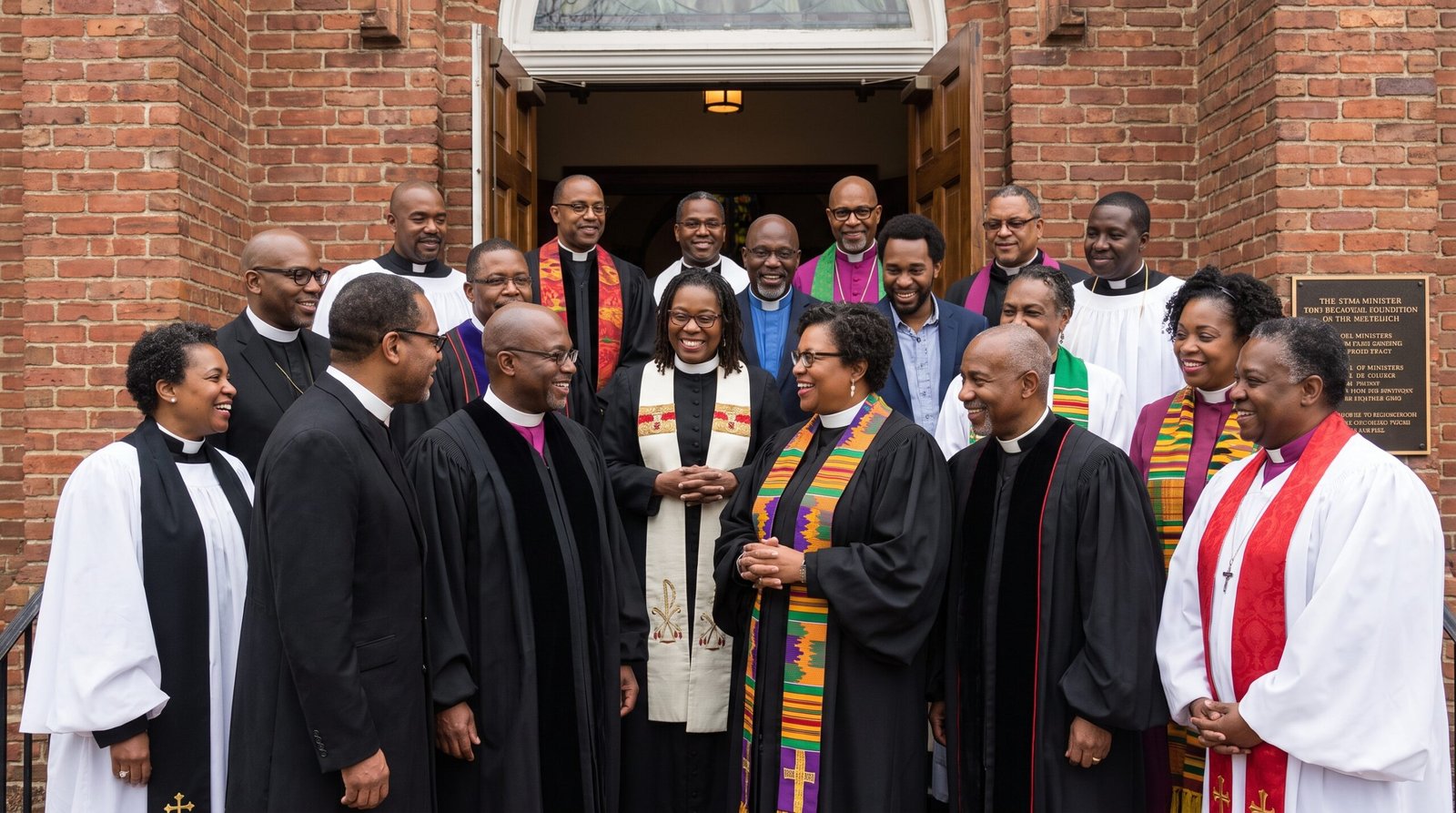
A consecration happens once. There is no reprint of the day itself, no second chance at the moment the mantle is received. The service will be photographed, streamed, remembered, and retold, and everything in the room that carries a design, from the program in every hand to the seal on the new bishop’s tippet, becomes part of the record.
That is a lot of weight for a planning committee to carry, especially when most committees have never planned a consecration before. This checklist walks through every design element the occasion requires, in the order it should be handled, with the timelines that make it all arrive on time.
First: The Seal (10 to 12 Weeks Out)
Everything else flows from the seal, so it comes first. The episcopal seal will appear on the program cover, the certificate, the invitations, the vestment patches, and the announcement graphics. If the seal is not finished, nothing else can truly begin.
A custom episcopal seal takes time to do well. The process typically includes a consultation on symbolism covering the consecration date, life verse, jurisdiction, and iconography, followed by original concepts and collaborative revisions. Budget two to three weeks for design, and begin ten to twelve weeks before the service so the finished seal can flow into everything downstream.
If you are unsure what belongs in the seal itself, we have written a full guide on episcopal seal symbolism, from the miter and crozier to the placement of the scripture reference.
The Vestment Patches (8 Weeks Out)
The moment the seal is final, the patches go into production. The new bishop’s tippet typically bears the seal, and many consecrations also adorn the presenting bishops’ gifts or the armor-bearers’ garments.
Patch production and shipping take roughly two weeks from proof approval, but consecrations are exactly the kind of event where shipping delays cannot be absorbed. Order patches at least eight weeks out, and confirm the tippet color first so the patch can be matched to the garment. If your seal features gradients, fine linework, or a scripture reference, read our guide on embroidered versus dye-sublimated patches before ordering anywhere, because the production method determines how much of the seal survives.
The Invitations and Announcement (8 Weeks Out)
Invitations should reach guests six weeks before the service, which means they are designed and finalized around the eight-week mark. The invitation suite usually includes:
- A printed or digital invitation carrying the new seal
- A save-the-date graphic for social media
- An official announcement graphic for the jurisdiction’s pages
A note on confidentiality: some elevations are not public until the announcement. A professional studio will treat the commission as confidential until your announcement date, and you should confirm that expectation in writing with any designer you engage.
The Program (4 to 6 Weeks Out)
The consecration program is the piece every guest holds and the piece most likely to be kept as a keepsake. A well-designed program typically includes the order of service, the officiants and presenting bishops, the new bishop’s biography and testimony, the litany of consecration, acknowledgments, and the new seal presented with dignity on the cover.
Two hard-won pieces of advice from the design desk:
Set a content deadline and hold it. Programs are where last-minute changes cluster: a speaker is added, the order of service shifts, or a name needs its title corrected. Set a final content deadline of ten business days before the service. Changes after that point put the entire print timeline at risk.
Pronounce the names out loud. Every title, every jurisdiction, and every spelling was read aloud by two people who were not involved in the design. The most painful errors in ceremony printing are always names, and they are always discovered too late.
The Certificate of Consecration (4 Weeks Out)
The certificate is the legal and historical record of the day, signed by the consecrating bishops and often framed for the new bishop’s office. It deserves the same design attention as the seal itself: the full episcopal seal, formal lettering, correct titles for every signatory, and space for signatures and the embossed seal if one is to be used.
Order certificate printing on heavyweight stock, and always order at least two: one to sign and frame, and one unsigned archival copy.
The Digital Presence (2 to 4 Weeks Out)
By two to four weeks out, the new seal should be ready to appear everywhere the ministry lives online the moment the consecration concludes:
- Social media profile and cover graphics carrying the new seal and title
- An updated email signature and letterhead for the new office
- A consecration event page or website update, if the ministry maintains one
- A countdown or celebration graphic series for the lead-up week
Preparing these in advance matters because the congregation’s excitement peaks the day of the service. When the new seal appears across every platform that same evening, the moment lands with its full weight.
The Week of the Service
By the final week, design work should be finished and in hand. The checklist for the week itself is short:
- Programs delivered and counted
- Certificate printed, proofed, and staged for signatures
- Patches sewn onto the tippet and vestments
- Digital graphics scheduled or staged for posting
- One person assigned as the point of contact for anything design-related, so questions do not scatter across the committee
The Simplest Version of This Checklist
If the timeline above feels like a second job, that is because it is one. The alternative is to place the entire design scope with a single studio: seals, patches, programs, certificates, invitations, and digital kits, planned backward from your service date by one team that has done it before.
That is exactly what our Bishop’s Consecration Package was built for. One engagement covers the entire occasion, with every deadline met and every piece bearing a consistent mark. The committee plans the service. We carry the design.
